


Energy First

Energy comes first. It always has.
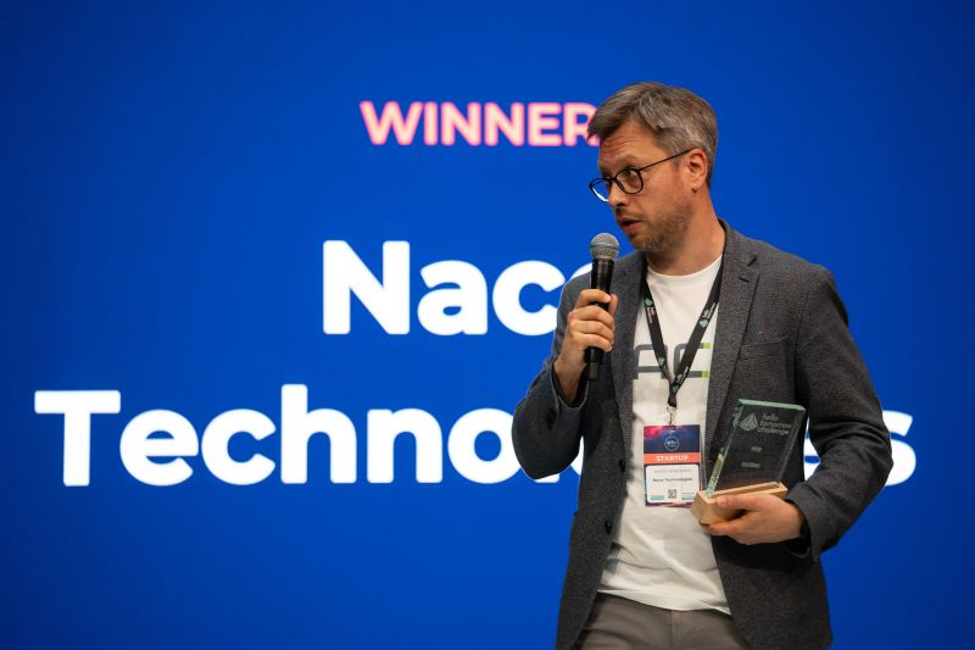
We were glad to see this idea recognized when Naco won the Energy Category at Hello Tomorrow. (linkedin). It’s an important signal — materials and coatings are not a side topic. They are one of the small things that decide whether future energy systems become cheap, durable, and scalable. At Naco Technologies, we believe that energy is the currency of the future.
Right now, everyone is talking about intelligence. AI models, tokens, compute — what becomes the new unit of value? But this is not the first time a new technology has changed the shape of the world. We have seen agriculture, industrialisation, electrification, computers, the internet, smartphones. Each shift looked different from the inside. From the outside, each one was enabled by energy. Coal made industrialization possible. Oil scaled mobility and global logistics. Electricity made computers and the internet viable. Smartphone market couldn’t exist without compact energy-dense batteries. Even earlier, agriculture needed the muscle of oxen and horses. So when people say that intelligence is the next currency, they are only half right. Intelligence still has an electricity bill. There can’t be new technological revolution without energy revolution.
For decades, the next energy step has been clear: controlled nuclear fusion. A system that could provide near-unlimited clean energy and fundamentally change the constraints we operate under. Research started in 1940s — almost a century ago — and since then there has been some progress, but it’s slow and breakthrough is still not here.
So today, we work with what we have. Energy production is still dominated by fossil fuels. Coal, oil and gas still provide about 80% of global primary energy. This keeps climate risk built into the base of the economy — this model simply cannot be sustainable. This is why we look at energy from two sides.
The first side is the green transition. There is no stable long-term future without renewables becoming primary energy source. But wind, solar and hydro have a simple problem: their output does not always match demand. The sun sets and wind changes, but industry still needs stable power. That is why energy storage and conversion matter. That is why batteries and green hydrogen systems like water electrolysers and fuel cells are the cornerstone of green transition. They can turn unstable renewable power into stable energy we can store, move, and use when needed. The problem is that these systems are often chemically aggressive. PEM electrolysers work in acidic environments and depend on scarce platinum group metals. Iridium is one of the best catalysts for the oxygen side, but global production is only around eight tonnes per year. That is not a comfortable foundation for a global energy transition.
This is where coatings become useful. With high-speed magnetron sputtering, we can put the expensive material only where it is needed, in a controlled thin layer, instead of using it as bulk material or wasting it in thick, uneven coatings. In PEM electrolysers, our work has shown around 10x reduction in iridium loading without loss of performance. On bipolar plates and porous transport layers, our platinum coatings can reduce platinum loading by 10 – 40x while keeping the required conductivity and corrosion protection.

Figure 1:High-speed magnetron sputtered gadolinium-doped ceria layer (as deposited on the left, in the cell structure on the right)
The same idea appears in solid oxide systems. A magnetron sputtered GDC barrier layer can be made about ten times thinner than a conventional layer made by screen printing or tape casting. Less thickness means less wasted resistance. Less wasted resistance means higher system efficiency.
This is the second side of the energy question: efficiency. A new energy revolution does not have to come only from a new energy source. It can also come from using the same energy much better. Computing is the best example. ENIAC used 150 kW of electricity and had its own dedicated power lines. Today, we carry computers in our pockets that run on a battery. That happened because engineers improved not only computing power, but computing efficiency. From 1946 to 2009, computing energy efficiency improved roughly by a factor of 1 000 000 000 000. A trillion times. Energy systems need the same kind of progress.
And coatings are one of the ways to do that — in fuel cells and electrolysers, interfacial contact resistance is one of those boring numbers that becomes important at scale. In a PEM electrolyser running at around 2 A/cm², every 1 mΩ·cm² of ICR adds about 2 mV of voltage loss per cell. If unprotected titanium contact surfaces passivate and ICR rises toward 100 mΩ·cm², this becomes roughly 0.2 V per cell — around 10% of the stack voltage turning into heat instead of useful hydrogen production. If a coating keeps ICR near 1 mΩ·cm², the ICR-related loss falls by a factor of 100. If a catalyst layer uses ten times less iridium, the same amount of critical material can support ten times more active area. That is why we care about coatings. They are not the whole energy transition. But they sit at the contact points where energy systems usually fail.
Fusion may still arrive. Hopefully, it does. But we do not need to wait for a star in a bottle to start the next energy jump. We can build part of it now by making green energy systems cheaper, cleaner, longer-lasting, and more efficient. Energy is the currency. Coatings decide how much of it we waste.
This page acts as a useful index for anyone wanting to learn about macOS productivity without sorting through unrelated content. The categories seem well chosen, and the layout makes it easy to find what you need. I'd point anyone curious about the site's offerings to this overview for a quick start.
Choosing between different AI assistants often comes down to trade-offs you only discover after testing. This comparison page addresses that by laying out the pros and cons across privacy, features, cost, and maintenance—all in one place. The decision guide is especially handy if you're short on time but need to make an informed choice. For a practical side-by-side view, this 2026 comparison resource is worth bookmarking.